

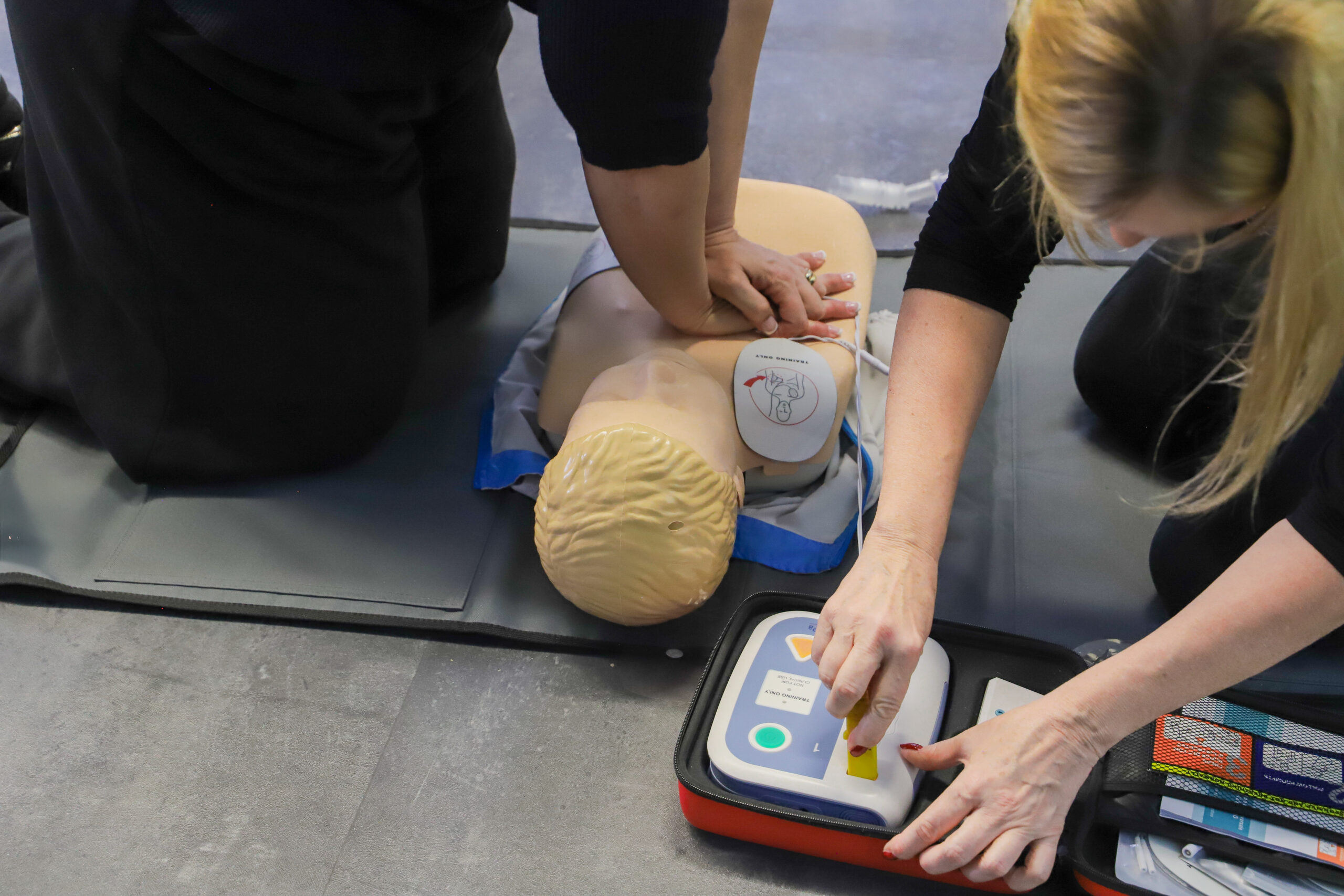


Defibrillator training prepares you to act when a person’s heart suffers from sudden cardiac arrest. Bystanders shape the chance of survival with what they do next. An automated external defibrillator (AED) is made for those first minutes.
Practice beforehand still takes the guesswork out of the moment. Defibrillator training is taught alongside cardiopulmonary resuscitation (CPR), and the two skills together cover the whole emergency, from the collapse to the handover when paramedics arrive.
What is an Automated External Defibrillator?
An automated external defibrillator is a portable device that reads a person’s heart rhythm through pads placed on their bare chest. It gives voice prompts that tell you what to do, and it treats some abnormal rhythms by delivering an electric shock to their heart.
When to Use a Defibrillator
You should use an automated external defibrillator when a person is unresponsive and not breathing normally after collapsing. A person who is only gasping is not breathing normally.
Around 26,000 cases of cardiac arrest happen outside hospital in Australia each year, and about 12 percent of the people treated by paramedics survive. Survival rates drop by roughly 10 percent for every minute that defibrillation is delayed. Ambulances need travel time, so a defib within reach of bystanders can deliver its shock minutes earlier than the one on board. Defibrillator training prepares you to act during that wait rather than watch it pass.
Steps for Using an AED
Check for danger before you approach a collapsed person. If traffic, water, or a live power source threatens you, deal with the hazard first or wait somewhere safe.
Squeeze the person’s shoulders and ask their name. If they do not respond, call 000, put the phone on speaker, and give your location. An ambulance is dispatched the moment the call taker has your address, and the line stays open while you work.
Look at their chest and listen for normal breathing. If there is none, start CPR while someone else fetches the nearest device. Push hard on the centre of their chest at 100-120 compressions per minute, or 1-2 each second. After every 30 compressions tilt their head back and give them two rescue breaths.
As soon as the defibrillator arrives, press its power button and follow the voice prompts. Strip or cut clothing from the person’s chest, dry the skin if it is wet, and press each AED pad firmly onto their bare chest in the positions drawn on them. Standard pads only suit adults and children, an AED should not be used on infants or small children without paediatric pads which can only be done by a trained medical professional.
Make sure everyone is clear of the patient before the device analyses the person’s heart rhythm. Anyone touching them can distort the analysis. If the prompt advises a shock, check again that no one is in contact with the person, and press the shock button. Some devices deliver it themselves after a spoken countdown.
Continue CPR whenever the prompts direct it, and leave the pads attached even when no shock is advised. Stop CPR only if the person starts breathing normally or moving, when paramedics take over from you, or if you are physically unable to continue.
Where to Find AEDs in Australia
AEDs are found in public places, including shopping centres, airports, train stations, gyms, sports clubs, swimming pools, and some workplaces. Look for a green and white sign showing a heart crossed by a lightning bolt.
Ambulance services keep registers of public devices, and call takers can point responders to the nearest accessible defibrillator during a 000 call. You can ask for that information the moment the call connects, and you can send someone else to collect the device while CPR continues.
What Else is Covered in CPR Training?

AED use is taught through CPR training. One training course covers the device and everything around it. The rest of defibrillator training centres on resuscitation itself.
CPR applies whenever a person is not breathing normally, so the same response covers drowning, choking, overdose, and cardiac arrest. Training also includes what to do for someone who is unresponsive but breathing, and you can learn to roll them onto their side so their airway stays clear and fluid can drain from their mouth.
Enrol in CPR Training to Practise AED Use
Defibrillator training gives you the chance to practice before a real emergency. You can ask questions and you can repeat each attempt until nothing about the device surprises you. Enrol in CPR training and you can practise CPR and use an AED before either skill is ever needed.
FAQs
Can an AED Shock Someone Who Does Not Need It?
No. The device only charges when it detects a rhythm that a shock can treat, and it withholds the shock when the person’s heart is beating normally.
Are You Legally Protected if You Use an AED on a Stranger?
Yes. Legislation across Australia protects people who give help in good faith and without expecting reward. No one acting in good faith has been sued in Australia for giving assistance.
How Often Should CPR Skills Be Refreshed?
Refresher training in CPR is recommended every year. A first aid course should be retaken every three years.