



A home first aid kit should contain the essential supplies needed to manage common injuries and provide immediate care while further medical help is arranged when necessary. For Australian households, useful first aid kit essentials include adhesive dressings, sterile wound dressings, gauze, bandages, disposable gloves, saline, scissors, tweezers, a cold pack, a CPR face shield and a first aid guide. Just as importantly, the kit should be easy for adults to find, regularly checked and customised for the people who live in your home.
Most of us hope the first aid kit will spend its life gathering dust. But cuts, burns, falls, splinters, sporting injuries and medical emergencies rarely arrive at convenient times. Having the right supplies in one organised place can make those first few minutes considerably easier. Knowing how to use them matters even more.
Key Takeaways
- A well-stocked home first aid kit should include dressings, bandages, gloves, saline, basic first aid tools and protective equipment.
- Customise your kit according to your household size, children’s ages, activities and individual needs.
- Keep the kit somewhere dry and easily accessible to adults, while storing medicines safely away from children.
- Check the kit after it has been used and conduct a complete stock and expiry check at least once a year.
- A first aid kit provides useful equipment, but first aid training teaches you what to do with it when an emergency occurs.

What Should Be in a Home First Aid Kit?
There isn’t one perfect first aid kit for every Australian household.
A couple living in an apartment will have different needs from a family with three young children. A household that spends weekends camping or playing sport may want additional supplies. Someone living with asthma or a serious allergy may have individual emergency medication and an action plan to consider.
There is, however, a sensible foundation.
Healthdirect recommends that a basic first aid kit contain a range of dressings, including crepe and triangular bandages, surgical tape, adhesive strips, dressing pads and gauze. Other recommended supplies include eye pads, sterile saline, a disposable cold pack, an emergency blanket, disposable resuscitation face shield, scissors, tweezers, disposable gloves and a first aid booklet. (Healthdirect)
First Aid Pro Australia provides similar guidance, listing items such as non-stick wound dressings, adhesive strips, combine dressings, gauze swabs, triangular and crepe bandages, saline, scissors, tweezers, nitrile gloves, an emergency blanket, cold pack and CPR protection mask among its basic first aid kit supplies.
That gives you a useful starting point.
Essential First Aid Supplies to Consider
For a general household kit, consider keeping:
The exact quantities depend on the size of your household and how the kit is likely to be used.
If four active children seem capable of consuming adhesive strips at roughly the same rate as breakfast cereal, buying a kit containing five small strips probably isn't going to cut it.
Customising Your First Aid Kit for Your Family
A good home first aid kit shouldn’t simply be something you buy, place in a cupboard and forget.
It should reflect your household.
Healthdirect specifically recommends customising a basic kit according to the number of people in the home, their ages and their needs. It also suggests adding appropriate supplies for activities such as sport and considering additional items for babies and people with known medical conditions.
For families with babies or young children, for example, a digital thermometer can be a useful addition. Healthdirect also identifies items such as an appropriate dosing syringe and age-appropriate medicines as possible additions for babies.
Medication requires more careful thinking than bandages and gauze. Medicines should be stored according to their instructions and kept out of children’s reach, preferably in a locked, child-resistant cabinet. Healthdirect also recommends keeping medicines in their original labelled containers and checking their expiry dates. That may mean your family’s medications are stored separately from an easily accessible first aid kit rather than simply thrown into the same bag.

Don't Underestimate Child-Friendly Bandages
Child-friendly bandages might sound like a minor detail, but anyone who has attempted to put a plain dressing on an unhappy four-year-old will appreciate the value of making minor first aid a little less frightening.
Colourful or patterned adhesive strips can help make the treatment of small cuts and grazes feel less intimidating.
The important part, of course, is what the dressing does rather than the cartoon printed on it. Make sure the product is appropriate for its intended use, the packaging remains intact and the dressing hasn’t passed its expiry date where one is provided.
It is also worth stocking different sizes. A tiny adhesive strip may be fine for a small nick on a finger, but larger grazes require appropriately sized dressings.
A family kit should be designed around the injuries you can reasonably anticipate rather than around what looks neat when you first open the case.

Think About Your Family's Activities
What does a normal weekend look like at your house?
If your family spends a lot of time playing sport, you might want additional cold packs or suitable sports strapping supplies. Healthdirect specifically identifies sports strapping tape as an example of how a kit can be customised for sporting activities.
If you regularly go camping, hiking or travelling, it may make sense to have a separate portable first aid kit rather than repeatedly removing supplies from your home kit.
The same principle applies to the car.
A beautifully stocked kit at home isn’t much help when someone is injured 100 kilometres away on a family camping trip.
Instead of trying to build one enormous kit for every conceivable emergency, many families will be better served by having a comprehensive home kit and smaller purpose-specific kits for the car, travel or outdoor activities.

Where Should You Store Your Home First Aid Kit?
The best first aid kit in Australia is useless if nobody can find it.
Healthdirect recommends storing a first aid kit in a safe, dry place that is easy to access, with everyone in the family knowing where it is kept. It should be readily accessible to adults.
Consistency is important.
If the kit lives in the laundry cupboard this month, the garage next month and somebody’s camping bag after that, valuable time can be lost looking for it.
Choose one permanent location and make sure the adults and older children in your household know where that is.
The location should also protect the contents from moisture, contamination and excessive deterioration. Healthdirect notes that the container itself doesn’t need to be expensive, but it should be identifiable, large enough for its contents and capable of protecting them from dust, moisture and contamination.
And remember that accessible first aid supplies and accessible medicines are not necessarily the same thing.
Scissors, dressings and disposable gloves may need to be found quickly. Medicines, on the other hand, need to be stored safely, particularly when young children are present.
Your First Aid Kit Needs a Stock-Checking Schedule
Here is one of the easiest household safety jobs to neglect.
You buy the kit. Someone uses three adhesive strips in February. Another family member takes the cold pack to Saturday sport. A roll of bandage disappears after an ankle injury. The saline expires. Someone borrows the scissors.
Then, two years later, you open the kit during an actual emergency and discover that half the useful items aren’t there.
A first aid kit needs maintenance.
Healthdirect recommends replacing supplies as soon as possible after they are used and checking the kit after each use or at least once every 12 months. During the check, look for items that are no longer usable or have expired and confirm that sterile items remain sealed.
A simple household routine works well.
Pick a memorable date each year — perhaps the start of summer, the beginning of the school year or when you check your smoke alarms — and give the first aid kit a complete inspection. Then perform a quick check whenever something has been used.
Don’t just look at expiry dates. Check quantities as well.
Ten perfectly good bandages aren’t much help if what your household regularly runs out of is adhesive dressings.

Budget vs Premium First Aid Kits: Does Price Matter?
Walk into a pharmacy or search online and you’ll find first aid kits ranging from very inexpensive personal packs to substantial kits costing considerably more.
More expensive doesn’t automatically mean more appropriate.
Healthdirect points out that a first aid kit container doesn’t need to be expensive or even specifically designed as a first aid container. What matters is that it is large enough, identifiable and able to protect its contents appropriately.
The contents deserve closer attention than the price tag.
A budget kit may be perfectly reasonable if it contains the supplies your household needs in useful quantities and you keep it properly stocked. A larger premium kit may provide more dressings, better internal organisation, a more durable case and additional equipment.
Organisation can be particularly valuable during an emergency. You don’t want to empty 70 miscellaneous items onto the floor simply to find a pair of gloves.
Before buying a kit, look at the contents list.
Ask yourself whether you are paying for useful supplies or simply for more supplies. Twenty varieties of something you’re unlikely to use may be less valuable than extra wound dressings, gloves, saline and bandages.
You can also build your own kit from suitable supplies. The important point is to make sure the final kit is comprehensive enough for your household and kept organised.
A First Aid Kit Isn't the Same as First Aid Knowledge
There is a bigger issue here.
Imagine someone in your home has a serious fall. There are gloves, triangular bandages and a CPR face shield sitting neatly inside your first aid kit.
Do you know what to do next?
Or a family member suddenly becomes unresponsive.
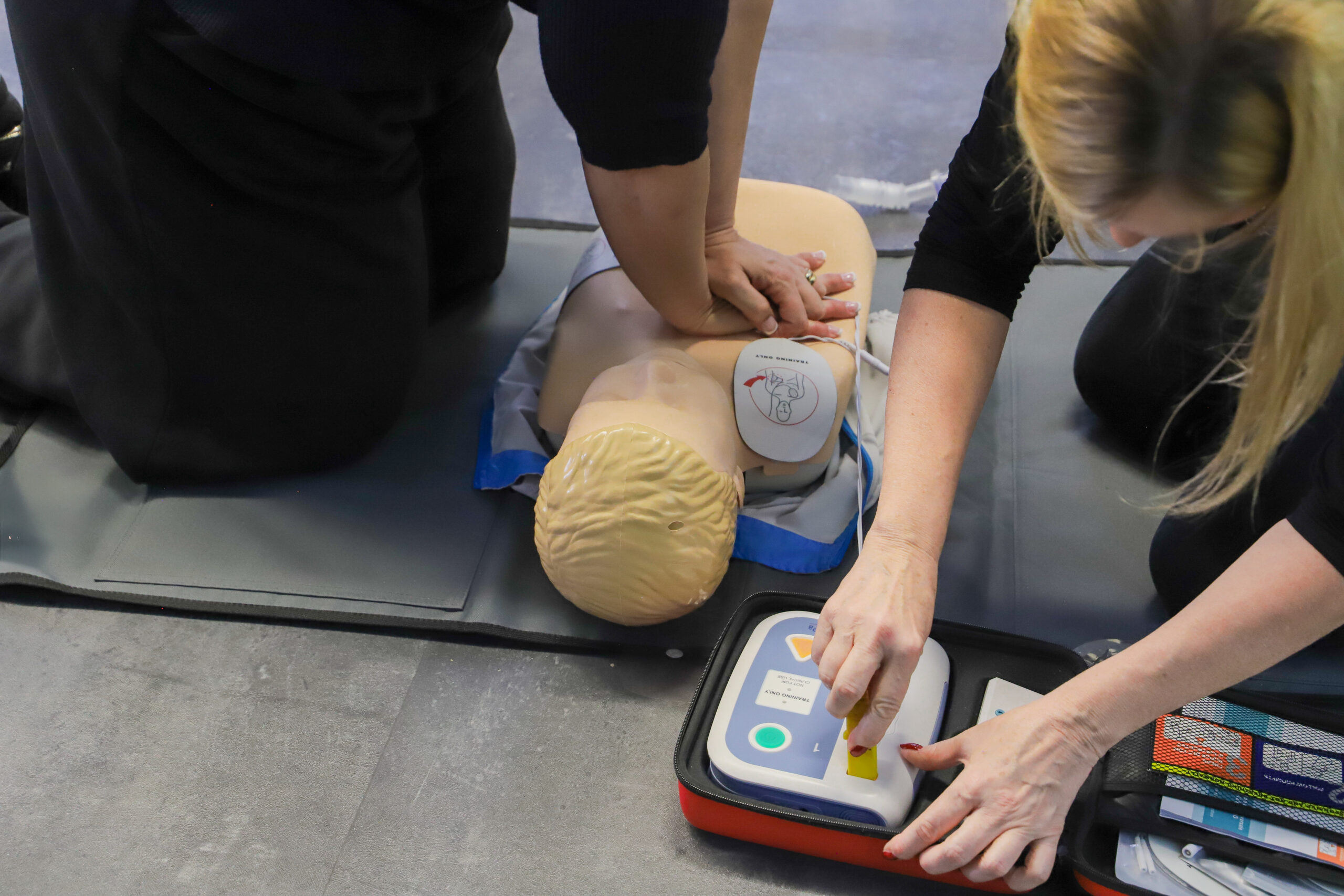
Would you recognise abnormal breathing? Would you know when CPR is required? Could you perform chest compressions and use an automated external defibrillator (AED) if one were available?
This is where equipment reaches its limit.
Healthdirect specifically recommends first aid training as a way of learning how to use first aid kit supplies and developing the knowledge and skills needed to provide first aid.
A recognised First Aid course with First Aid Pro can help turn a collection of emergency supplies into something much more useful: practical preparedness.
First aid training gives you an opportunity to learn and practise how to respond to emergencies rather than trying to interpret instructions for the first time while somebody is injured.
That distinction is vital.
You don’t buy a fire extinguisher because you’re planning a fire. You have one because emergencies are unpredictable. A first aid kit follows much the same logic — and training helps you understand what to do when the unexpected happens.
Make First Aid Part of Household Preparedness
Most household first aid isn’t dramatic.
It might involve cleaning and covering a small wound, helping someone after a minor injury or reaching for a cold pack after weekend sport.
But occasionally the situation is more serious.
First aid is the immediate assistance given to somebody who is injured or becomes suddenly unwell. In a serious or life-threatening emergency in Australia, call Triple Zero (000) and request an ambulance.
The first aid kit should therefore be considered part of a wider household emergency plan.
Know where it is. Keep it stocked. Make sure other members of the household know where to find it. Keep important emergency information accessible. And, most importantly, develop the skills needed to respond.
A recognised First Aid course through First Aid Pro can help you learn practical skills for managing common injuries and medical emergencies, including situations where professional medical assistance is required.
Because when something happens at home, the most valuable thing about your first aid kit is knowing how to use it.
Related Reading
- Healthdirect – First aid kits
- First Aid Pro Australia – What Is in a First Aid Kit? Essential Supplies for Emergencies
- First Aid Pro Australia – Free First Aid Charts & Posters
- National Training Register – HLTAID011 Provide First Aid
FAQs
What are the most important items in a home first aid kit?
A basic home first aid kit should contain a useful selection of adhesive strips, sterile wound dressings, gauze, bandages, medical tape, saline, disposable gloves, scissors, tweezers, an instant cold pack, an emergency blanket and CPR protection equipment. An up-to-date first aid guide is also useful. The quantities and additional supplies should be customised for your household.
How often should I check my home first aid kit?
Check the kit whenever you use it and replace used supplies promptly. Health authorities recommend a full check at least once every 12 months, including checking expiry dates, condition and whether sterile packaging remains sealed.
Where should a first aid kit be stored at home?
Keep it in a safe, dry location that adults can access easily, and make sure household members know where it is. Medicines require additional precautions and should be kept out of children’s reach and stored according to their instructions.
Is an expensive first aid kit better than a cheap one?
Not necessarily. Look at the contents, quantities, quality, organisation and suitability for your family rather than judging a kit by price alone. A less expensive kit that contains appropriate supplies and is regularly maintained can be more useful than an expensive kit filled with items you don’t need.
Do I need first aid training if I already have a first aid kit?
A kit gives you equipment; training teaches you how and when to use first aid skills. Healthdirect recommends first aid courses as a way of developing the knowledge and skills needed to provide first aid. Completing recognised training with First Aid Pro can help you prepare to respond more effectively when an injury or medical emergency occurs at home.